You love Linear. The speed. The keyboard shortcuts. The clean design. The beautiful roadmaps. For issue tracking, it's exceptional.
But Linear doesn't know your strategy. It doesn't understand why features matter. It can't tell you how this sprint connects to company goals. It tracks what you're building without knowing why you're building it.
Waymaker adds the context Linear can't provide—without replacing what Linear does well.
What Linear Does Beautifully
The Linear Experience
Linear excels at:
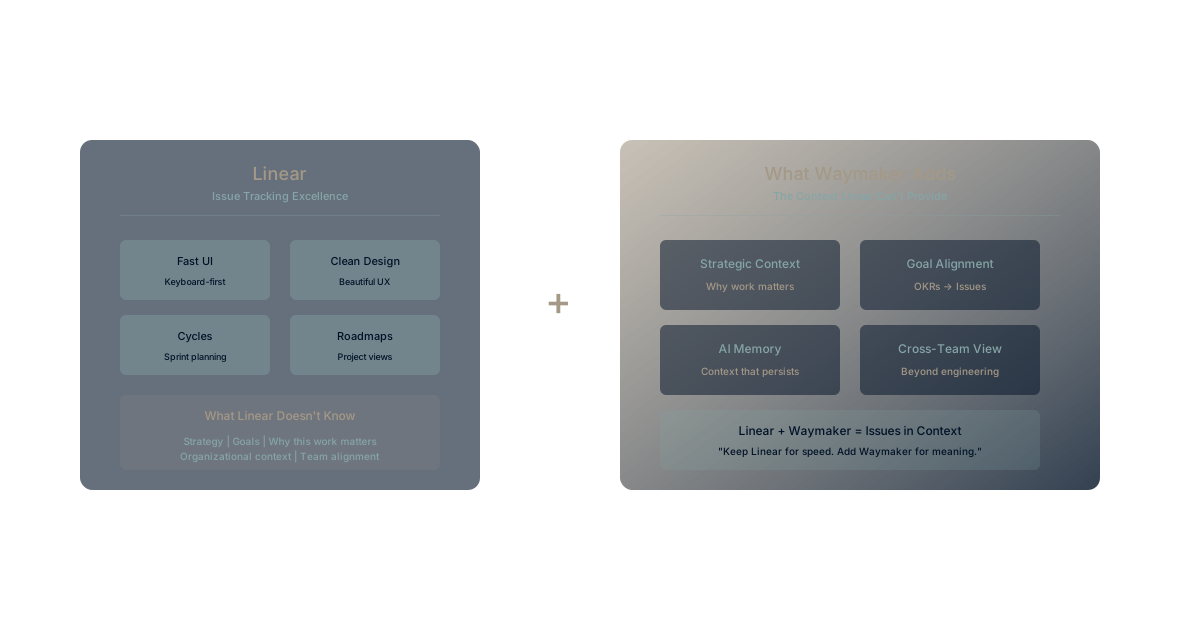
Speed: Sub-50ms response times for everything Keyboard-first: Power users never touch the mouse Design: Aesthetically beautiful, functionally clear Cycles: Sprint management that feels natural Roadmaps: Visual project timelines Triage: Issue management with workflow
Engineering teams love Linear for good reason. It's the best issue tracker most have ever used.
Linear's Scope
Linear focuses intentionally on:
- Issue tracking and management
- Sprint/cycle planning
- Engineering roadmaps
- Team workload management
- Development workflow
This focus is a strength. Linear does these things exceptionally well by not trying to do everything.
What Linear Doesn't Cover
By design, Linear doesn't address:
Strategic context: Why does this project matter to the company? Goal alignment: How does this sprint advance annual objectives? Cross-functional visibility: What are marketing/sales/support doing? Organizational memory: What decisions led to this approach? AI that understands: Context that persists across tools and sessions
These aren't Linear failures—they're outside Linear's scope. But they're essential for effective work.
The Context Gap
Issues Without "Why"
Open any Linear issue. You'll see:
- Title and description
- Status and priority
- Assignee and timeline
- Labels and project
You won't see:
- How this connects to company strategy
- Which customer outcomes it enables
- What decisions informed the approach
- How it relates to other team's work
This context lives in people's heads, Slack threads, and scattered documents.
Projects Without Purpose
Linear projects organize issues. But:
- Why is this project happening?
- What business outcome does it target?
- How does success get measured?
- What happens if it doesn't ship?
Engineering teams often work on projects without knowing the strategic reasoning. Not because nobody told them—but because the systems don't connect.
Cycles Without Direction
Each sprint delivers issues. But:
- Are we making progress toward goals?
- Is this the most important work right now?
- How does velocity translate to outcomes?
- What should change based on results?
Cycle completion doesn't equal strategic progress. The connection requires context Linear doesn't hold.
What Waymaker Adds
Strategic Context Layer
Waymaker provides what Linear assumes:
Goal connection: Every project links to objectives Strategy visibility: See how work serves company direction Priority rationale: Understand why this matters Impact tracking: Connect completion to outcomes
When engineers ask "why are we building this?" the answer exists in the system—not in someone's memory.
Cross-Functional Awareness
Linear shows what engineering does. Waymaker shows:
- What marketing is launching
- What sales is promising
- What support is hearing
- What leadership is prioritizing
This visibility prevents the disconnects that cause rework and frustration.
AI With Organizational Memory
Waymaker's AI understands your organization:
Ask questions: "What's the history of this project?" Get context: "Why did we choose this approach?" Find connections: "What other work affects this?" Access decisions: "What did we decide about the API?"
This is context engineering applied to your workflow—AI that knows your organization, not just general knowledge.
The Context Compass Framework
Waymaker's Context Compass connects:
Strategic layer: Vision, mission, annual objectives Planning layer: OKRs, initiatives, key results Execution layer: Projects, tasks, deliverables (Linear lives here) Knowledge layer: Decisions, learnings, history
Linear excels at execution. Waymaker provides the layers above and below that give execution meaning.
Linear + Waymaker Together
Keep What Works
You don't replace Linear. You complement it:
Continue using Linear for:
- Issue creation and management
- Sprint planning and execution
- Engineering workflow
- Development roadmaps
Add Waymaker for:
- Strategic alignment
- Cross-functional visibility
- Organizational memory
- AI-powered context
How They Work Side by Side
There is no Linear connector. The two sit side by side:
- Key Linear projects are added as links in the Commander workspace beside the objectives they serve
- A Commander taskboard connected to your GitHub repo turns the PRDs and briefs engineering writes into a roadmap the rest of the business can read
- Your AI agent reaches goals, documents and tasks through the Waymaker MCP server while it works
Work flows through Linear. Context lives in Waymaker. Both systems do what they do best.
Example Workflow
Quarterly planning (in Waymaker):
- Define objectives and key results
- Identify projects that deliver results
- Allocate initiatives to teams
Sprint planning (in Linear):
- Break projects into issues
- Assign to cycles
- Execute and track
Progress review (in Waymaker):
- See Linear progress in strategic context
- Assess whether velocity produces outcomes
- Adjust priorities based on results
What Changes
With Waymaker:
Engineers see: How their work connects to company goals PMs see: Cross-functional context for prioritization Leaders see: Strategic progress, not just issue completion Everyone sees: The why behind the what
The Combined Value
For Engineers
Before: "Complete this issue" After: "Complete this issue, which enables [outcome], serving [customer need], advancing [company goal]"
Context transforms compliance into contribution.
For Product Managers
Before: "Prioritize based on available information" After: "Prioritize with full organizational context, strategic alignment, and cross-functional visibility"
Context enables better decisions.
For Leaders
Before: "Is engineering productive?" (measure velocity) After: "Is engineering effective?" (measure strategic progress)
Context connects activity to outcomes.
For Organizations
Before: Linear as isolated excellence After: Linear as connected execution within strategic context
The whole becomes greater than excellent parts.
Getting Started
Evaluate the Fit
Waymaker + Linear works well if you:
- Love Linear and want to keep using it
- Need strategic alignment for engineering work
- Want cross-functional visibility
- Value AI with organizational context
It may not fit if you:
- Want all-in-one solutions
- Have minimal strategic planning needs
- Work in isolation from other functions
Start With Connection
Begin by connecting:
- Key projects: Add your most important Linear projects as workspace links beside the Waymaker objectives they serve
- Current cycle: Connect this sprint to quarterly goals
- Decision context: Document the why behind current priorities
- Cross-team visibility: See what other functions are doing
Experience the Difference
Once connected, notice:
- Engineers asking fewer "why" questions (context is accessible)
- Prioritization debates resolving faster (strategic context is visible)
- Cross-functional conflicts decreasing (visibility prevents surprises)
- Leadership reviews becoming meaningful (progress connects to outcomes)
Experience Waymaker + Linear
Want to see how strategic context transforms Linear usage? Waymaker Commander provides the context layer that makes issue tracking strategically meaningful.
Keep Linear for what it does beautifully. Add Waymaker for what it doesn't address.
Register for the beta and experience issues in context.
Linear tracks issues excellently. Waymaker provides the context that makes those issues meaningful. Together, they create execution that's both fast and strategically aligned. Learn more about context engineering and explore the Context Compass framework.
This analysis reflects Waymaker's integration approach: complement excellent tools rather than replace them, adding the context layer that specialized tools can't provide.
About the Author

Waymaker Editorial
Stuart Leo founded Waymaker to solve a problem he kept seeing: businesses losing critical knowledge as they grow. He wrote Resolute to help leaders navigate change, lead with purpose, and build indestructible organizations. When he's not building software, he's enjoying the sand, surf, and open spaces of Australia.