Free White Paper
The SaaS Sprawl Report
Your team uses 47+ apps. Here's what it actually costs — and how to consolidate without losing features.
30 min
PDF download
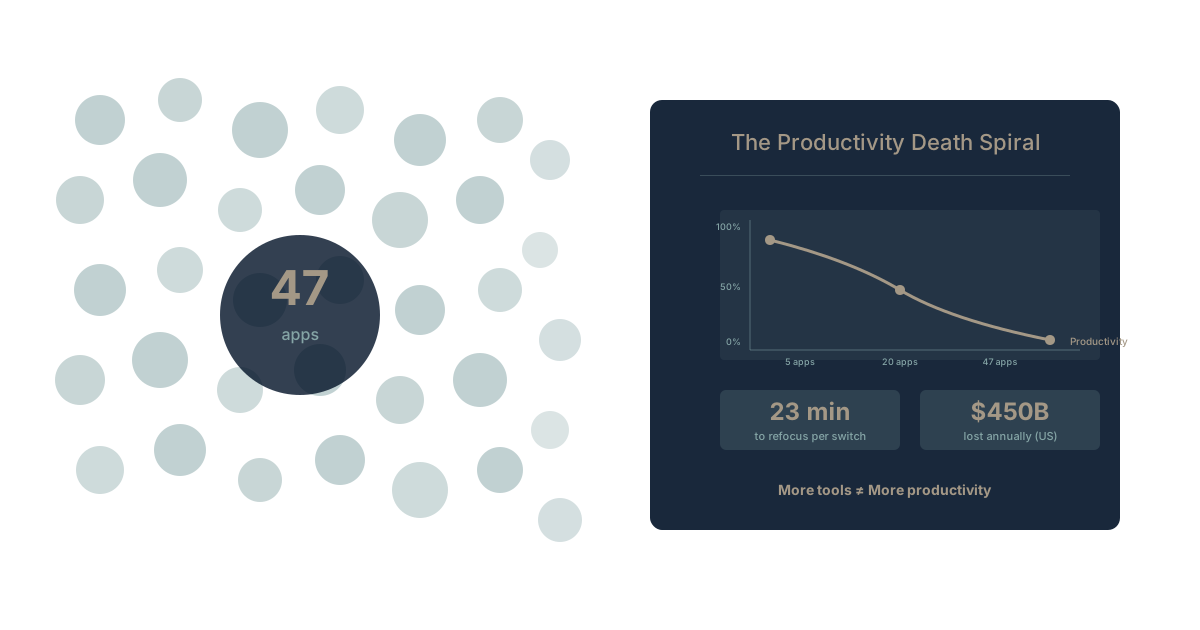
The average company now uses 47+ SaaS applications, costing $4,800 per employee annually in lost productivity alone — before you count the subscription fees. This white paper quantifies the true cost of tool sprawl (including the hidden integration tax and context-switching penalty), gives you a step-by-step consolidation audit framework, and shows how unified platforms eliminate the problem at the root.
What's inside
- The 47-App Reality — hard data on how many tools the average business actually runs and what it costs per employee
- The Hidden Cost Model — subscription fees are just 30% of the real cost; learn about the integration tax, context-switching penalty, and knowledge fragmentation
- The True Cost Calculator — a framework to quantify what your specific tool stack costs beyond the invoices
- A 4-Phase Consolidation Playbook — audit, decide, migrate, and measure without disrupting your team
- The Unified Platform Alternative — how modern platforms eliminate sprawl at the architecture level
Who this is for
- -Business owners and operators managing 5 to 100+ person teams
- -Operations managers tired of manual data entry and reconciliation
- -Anyone who suspects their team spends too much time on repetitive work
Frequently asked questions
- How many apps does the average company use?
- The average company uses 89 apps. Mid-market companies use 137, and enterprises use over 200—and that's before shadow IT adds another 30-50% on top.
- What is tool sprawl?
- Tool sprawl is the gradual accumulation of disconnected applications across an organization, each adopted for a rational reason but together fragmenting work, scattering data, and quietly draining productivity.
- Why does tool sprawl hurt productivity?
- It taxes you in five places: context switching, integration maintenance, learning new software, security and governance, and vendor management. Each app means another login, another silo, and another context switch—the hidden costs nobody counts.
- How do I fix tool sprawl?
- Start by auditing your tool landscape so you can see what you actually have, calculate the hidden costs, then identify where three tools could become one. Consolidation is a 6-18 month effort, not a weekend project.
- Why does tool sprawl matter for AI?
- AI effectiveness depends on data accessibility. Organizations with unified data can deploy AI that understands context across all their work, while fragmented companies only get AI that works within individual silos—a gap that compounds every month.