Most leadership development focuses on traits and skills: be more decisive, develop emotional intelligence, communicate clearly, think strategically. But here's what decades of leadership research reveals: exceptional leaders don't just have better traits—they master multiple leadership postures and know precisely when to deploy each one.
Yet here's the organizational amnesia trap: even when individual leaders develop posture flexibility, that knowledge rarely becomes institutional wisdom. Each new leader rediscovers which postures work in which situations, repeating experiments and making mistakes that previous leaders already navigated.
The difference between companies with deep leadership capability and those perpetually struggling isn't individual leader talent—it's whether leadership knowledge becomes organizational memory that compounds across generations of leaders.
The Five Essential Leadership Postures
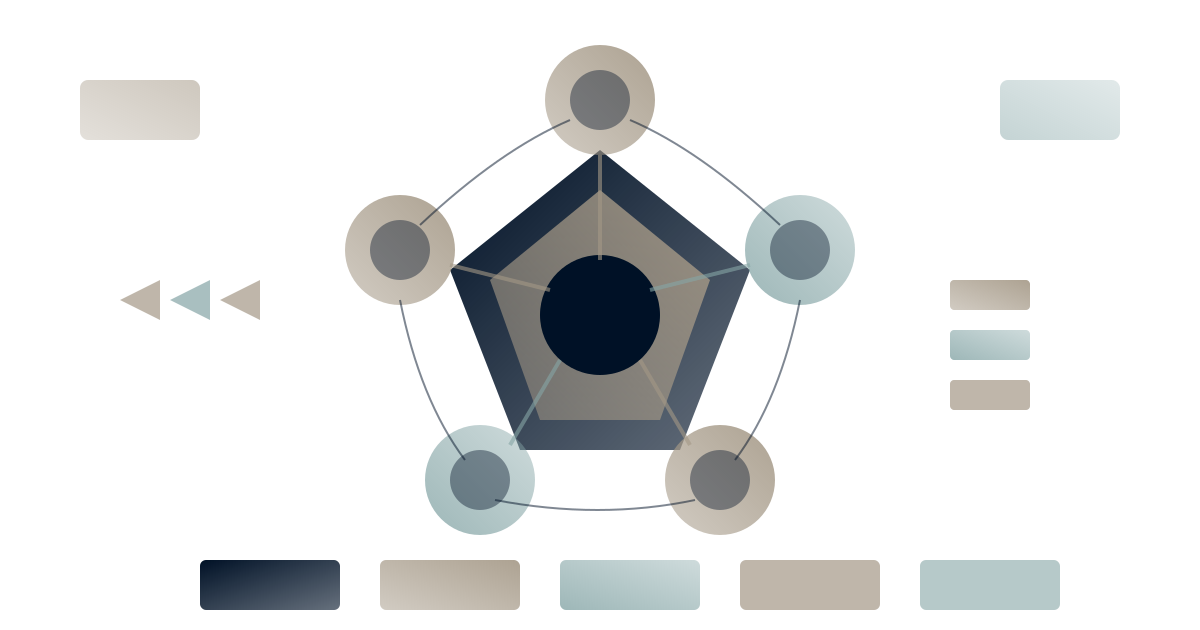
Research from leadership scholars including Bill Torbert, David Rooke, and Robert Kegan reveals that leadership effectiveness comes from posture flexibility—the ability to shift between different modes of leading based on context. Here are the five critical postures every leader must master:
Posture 1: The Visionary (Setting Direction)
When to Use:
- Beginning new strategic initiatives
- Navigating fundamental change
- Inspiring commitment to ambitious goals
- Times when the team needs a compelling future to rally around
What It Looks Like:
The Visionary posture paints a compelling picture of the future and inspires others to help create it. This isn't about detailed planning—it's about articulating a destination worth pursuing and building belief that reaching it is possible.
Key Capabilities:
- Articulate clear, compelling vision of desired future state
- Connect current challenges to larger purpose
- Build emotional commitment to ambitious goals
- Communicate "why" powerfully before "how"
The Organizational Memory Dimension:
When leaders successfully use this posture, capture:
- What made the vision compelling (the elements that resonated)
- How the vision was communicated (channels, messages, stories)
- What resistance emerged and how it was addressed
- What made people believe it was achievable
This preserved knowledge makes future visionary leadership more effective because you're building on proven approaches instead of starting fresh.
Real Example:
When Satya Nadella became Microsoft CEO, he articulated a vision of "mobile first, cloud first" that redirected the company from its Windows-centric past. The vision worked because it acknowledged market reality while painting an achievable path forward. Microsoft preserved this approach in their leadership development—teaching future leaders how Nadella built belief in dramatic change.
Posture 2: The Strategist (Creating Clarity)
When to Use:
- Translating vision into actionable strategy
- Making critical choices about resource allocation
- Establishing priorities when everything seems important
- Times when the team needs clear direction on trade-offs
What It Looks Like:
The Strategist posture brings analytical rigor to choices. This isn't about inspiring emotion—it's about clear thinking that separates signal from noise and makes tough prioritization decisions.
Key Capabilities:
- Analyze complex situations systematically
- Identify critical few priorities from the important many
- Make explicit trade-offs and explain reasoning
- Establish decision frameworks that guide action
The Memory Challenge:
Strategic decisions made without preserving the reasoning behind them become organizational amnesia traps. Six months later, teams debate the same priorities because nobody remembers why certain choices were made.
The Solution:
Document strategic decisions with:
- The situation that required the choice
- Options considered and evaluation criteria
- Trade-offs accepted and why
- Expected outcomes and review triggers
Real Example:
Amazon's strategic posture includes documented "one-way door" vs. "two-way door" decision framework. This strategic thinking has been preserved and taught throughout the organization, enabling thousands of leaders to make better strategic choices using shared mental models.
Posture 3: The Coach (Developing Capability)
When to Use:
- Building team capability through guidance vs. direction
- Helping others develop problem-solving skills
- When the goal is learning, not just execution
- Times when sustainable capability matters more than immediate results
What It Looks Like:
The Coach posture develops others by asking powerful questions rather than providing answers. This requires patience and intentionality—coaching takes more time initially but builds capability that compounds.
Key Capabilities:
- Ask questions that promote thinking vs. providing answers
- Create learning opportunities from challenges
- Provide feedback that develops self-awareness
- Balance support with appropriate challenge
The Organizational Learning Loop:
Coaching effectiveness should improve organization-wide as coaching insights are preserved:
Capture:
- What coaching approaches work with different development needs
- What questions unlock breakthrough thinking
- What feedback structures accelerate growth
- What common development challenges emerge and proven solutions
Share:
- Build coaching playbooks from successful approaches
- Create question libraries that leaders can reference
- Document case studies of effective coaching
The Compound Effect:
Organizations with strong coaching cultures preserve and share coaching knowledge. New leaders don't start from scratch—they leverage accumulated wisdom about what develops people effectively.
Posture 4: The Operator (Driving Execution)
When to Use:
- During execution when results require close coordination
- In crisis when directive leadership is needed
- When expertise and speed matter more than participation
- Times requiring precise execution of complex operations
What It Looks Like:
The Operator posture brings clarity, efficiency, and accountability to execution. This is directive leadership—clear expectations, defined processes, and tight performance management.
Key Capabilities:
- Establish clear accountability for outcomes
- Create efficient systems and processes
- Monitor performance closely and intervene when needed
- Remove obstacles to execution rapidly
The Memory Preservation Imperative:
Operational excellence should compound across time:
Capture:
- Execution approaches that consistently deliver results
- Process improvements discovered during operations
- Crisis response playbooks built from experience
- Performance management practices that work
The Risk:
Operator posture without memory preservation means every execution cycle starts fresh, never building on past learnings. Organizations repeat the same operational mistakes because process knowledge wasn't captured.
Real Example:
Toyota's operational excellence comes partly from systematic capture of operational learning. Their kaizen (continuous improvement) approach includes built-in knowledge preservation—every process improvement is documented and shared, building compounding operational intelligence.
Posture 5: The Collaborator (Building Collective Intelligence)
When to Use:
- When problems require diverse perspectives
- Building buy-in for decisions affecting multiple stakeholders
- Navigating complex situations without clear answers
- Times when collective intelligence exceeds individual expertise
What It Looks Like:
The Collaborator posture facilitates collective problem-solving. This isn't about consensus for consensus sake—it's about leveraging diverse thinking to reach better solutions than any individual could create.
Key Capabilities:
- Create environments where diverse perspectives emerge
- Facilitate productive dialogue across differences
- Synthesize collective insights into coherent direction
- Build shared ownership of solutions
The Knowledge Multiplication Effect:
Collaboration should build organizational knowledge, not just solve immediate problems:
Capture:
- Cross-functional insights that emerged from collaboration
- Collaborative processes that worked vs. created dysfunction
- Patterns of successful synthesis from diverse inputs
- Stakeholder engagement approaches that build ownership
The Memory Test:
When your organization collaborates, does it get better at collaboration over time, or does each collaborative effort start from scratch? The difference is whether collaborative knowledge becomes institutional memory.
The Critical Skill: Posture Flexibility
Knowing the five postures isn't enough—exceptional leaders master the transitions between them. The most common leadership failures come from staying stuck in one posture when situations demand another.
Common Traps:
- The Stuck Visionary: Continues inspiring when teams need operational clarity
- The Over-Strategist: Endlessly analyzes when decisions and execution are needed
- The Coaching Extremist: Asks questions when directive action is required
- The Perpetual Operator: Drives execution without developing team capability
- The Collaboration Addict: Seeks consensus when vision or decision is needed
The Solution:
Develop contextual awareness about which posture fits which situation:
Use Visionary When:
- Direction is unclear and commitment is low
- Change requires inspiration
- Purpose needs reconnection
Use Strategist When:
- Priorities are unclear
- Resources are constrained
- Trade-offs must be made explicit
Use Coach When:
- Capability development matters long-term
- Teams have potential but need growth
- Learning is more valuable than immediate results
Use Operator When:
- Execution precision is critical
- Speed matters
- Complexity requires coordination
Use Collaborator When:
- Diverse perspectives are essential
- Buy-in determines success
- Collective intelligence exceeds individual expertise
Building Organizational Memory of Leadership Effectiveness
Individual leaders developing posture flexibility is valuable. Organizations that preserve and share leadership knowledge build compounding capability:
The Leadership Playbook System
Create organizational memory of leadership effectiveness:
For Each Posture:
- Document situations where this posture worked well
- Capture specific practices that were effective
- Record common mistakes to avoid
- Build libraries of resources (vision speeches, strategic frameworks, coaching questions, operational processes, collaboration structures)
For Posture Transitions:
- Identify signals that suggest posture shifts needed
- Capture successful transition examples
- Document how to communicate posture shifts to teams
The Leadership Development Laboratory
Accelerate leadership learning through institutional knowledge:
New Leaders:
- Access years of accumulated leadership wisdom
- Study documented cases of effective posture use
- Learn from preserved examples of when leaders stayed stuck vs. shifted effectively
Experienced Leaders:
- Contribute their posture mastery to institutional knowledge
- Review emerging leaders using documented frameworks
- Build on accumulated coaching insights
The Leadership Effectiveness Metrics
Measure whether leadership capability is compounding:
Individual Level:
- Posture flexibility (can leaders access all five postures?)
- Contextual accuracy (do they choose appropriate postures for situations?)
- Transition skill (how smoothly do they shift between postures?)
Organizational Level:
- Leadership knowledge leverage (how often do leaders reference institutional leadership wisdom?)
- Development velocity (are new leaders developing faster due to preserved knowledge?)
- Leadership consistency (is effective leadership spreading across the organization?)
Implementation: 90 Days to Posture Mastery
Days 1-30: Assessment
- Evaluate your natural posture preferences (which comes easiest?)
- Identify your posture gaps (which do you avoid or struggle with?)
- Assess organizational leadership memory (what wisdom exists vs. what's tribal knowledge?)
Days 31-60: Development
- Practice your weakest posture deliberately
- Document your leadership approaches (start building personal leadership playbook)
- Study effective examples of each posture in your organization
Days 61-90: Integration
- Apply appropriate postures consciously based on context
- Capture what works (contribute to organizational leadership knowledge)
- Share learning with other leaders (build collective leadership capability)
The Compound Effect of Leadership Memory
Year 1: Individual leaders develop posture flexibility; leadership knowledge starts being documented
Year 2: New leaders learn faster by studying documented leadership approaches; fewer repeated mistakes
Year 5: Organization has searchable leadership intelligence spanning years of experience; leadership capability becomes competitive advantage
Year 10: Leadership excellence is institutional, not dependent on individual talent; knowledge compounds across leadership generations
This is how organizations build deep leadership capability: by preserving and compounding leadership knowledge across time instead of letting each generation rediscover what works.
Related Resources
Ready to master leadership postures while building organizational memory? Explore these guides:
- What Makes a Great Leader? Insights from Top CEOs - Leadership patterns from exceptional leaders
- How to Develop Leadership Skills in 4 Easy Steps - Systematic leadership development
- The Role of Leadership in Strategic Planning - Strategic posture application
- Emotional Intelligence in Leadership - EQ foundation for posture flexibility
- How to Lead Through Change and Uncertainty - Posture transitions during change
- The Power of Leadership Development Programs - Building organizational leadership capability
- Leadership and Management: What's the Difference? - Understanding leadership vs. management postures
- 10 Essential Entrepreneurial Leadership Skills - Entrepreneurial leadership capabilities
For platforms that help preserve leadership knowledge and build compounding organizational capability, explore Waymaker's leadership development tools designed to prevent leadership amnesia.
About the Author

Stuart Leo
Stuart Leo founded Waymaker to solve a problem he kept seeing: businesses losing critical knowledge as they grow. He wrote Resolute to help leaders navigate change, lead with purpose, and build indestructible organizations. When he's not building software, he's enjoying the sand, surf, and open spaces of Australia.