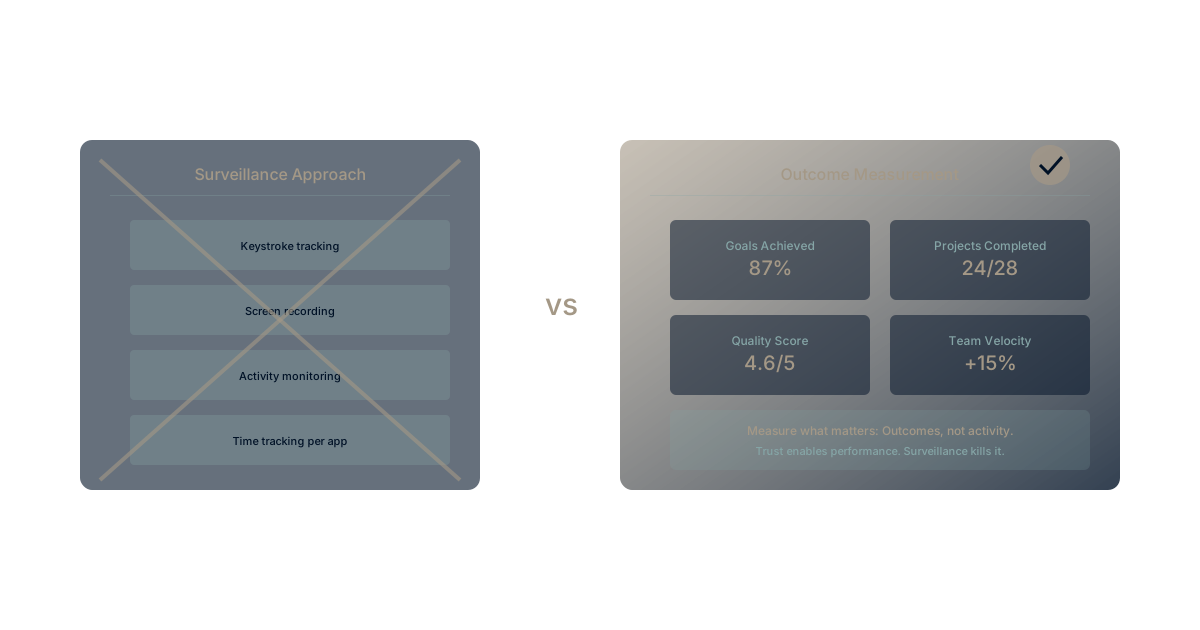
Remote work expanded dramatically. So did "productivity monitoring" software. Keystroke logging. Screen recording. Activity tracking. Mouse movement analysis.
The surveillance industry promises productivity visibility. What it delivers is surveillance that damages trust, produces misleading data, and treats knowledge work like factory output.
There's a better way. Measure what actually matters—outcomes, not activity. Build systems that enable rather than watch.
The Surveillance Problem
What Monitoring Software Measures
Most productivity monitoring tools track:
- Keystrokes per minute: Typing speed as productivity proxy
- Application usage time: Time spent in "productive" vs "unproductive" apps
- Screen captures: Random or continuous screenshots
- Mouse movement: Activity as proxy for work
- Active vs idle time: Presence as productivity indicator
These metrics share a fatal flaw: they measure activity, not value.
Why Activity Metrics Mislead
Knowledge work isn't factory work. Productivity doesn't correlate with visible activity:
A developer thinking about architecture creates more value than one frantically typing code that won't work. A strategist reading and synthesizing creates more value than one producing reports nobody needs. A manager in focused conversation creates more value than one generating email volume.
According to research from Stanford, remote workers are often more productive than office workers—but not because they're being watched.
Activity monitoring optimizes for looking busy. Organizations need to optimize for creating value.
The Trust Destruction Effect
Surveillance damages what it claims to protect:
Trust erosion: Employees treated as suspects disengage Stress increase: Monitored workers report higher anxiety Creative suppression: Fear of looking "unproductive" kills experimentation Top talent exit: Best performers leave surveillance environments
Gartner research consistently shows that trust-based management outperforms surveillance-based management. The tools meant to ensure productivity actively undermine it.
The Gaming Problem
Once you measure something, people optimize for it:
- More keystrokes (typing nonsense)
- More "active time" (mouse jigglers)
- More time in "approved" apps (windows open, attention elsewhere)
- More visible output (quantity over quality)
Surveillance creates elaborate performance theater that crowds out actual work. You get metrics that look good and outcomes that suffer.
What Actually Predicts Productivity
Outcome-Based Measurement
Instead of activity, measure results:
Goals achieved: Did the team meet objectives? Projects delivered: Were commitments kept? Quality metrics: Does the work meet standards? Impact measures: Did the work create intended value?
These metrics answer the question that matters: "Did we accomplish what we set out to accomplish?"
Team Velocity and Capacity
For ongoing work:
Throughput: How much completed work over time? Cycle time: How long from start to finish? Quality rate: What percentage meets standards first time? Capacity utilization: Are teams over or under-loaded?
These metrics inform management decisions without surveilling individuals.
Leading Indicators
For predicting future performance:
Engagement scores: Are people invested in the work? Blockers identified: Are obstacles visible and addressed? Dependency tracking: Are cross-team connections working? Progress visibility: Is work moving through the system?
Leading indicators enable intervention before problems become failures—without watching individuals.
Building Trust-Based Productivity Systems
Clear Goals and Expectations
Surveillance substitutes for management. Trust-based systems require:
Explicit goals: What are we trying to achieve? Clear priorities: What matters most? Defined quality: What does "good" look like? Reasonable timelines: When is delivery expected?
When expectations are clear, outcome measurement is possible. When expectations are vague, surveillance fills the vacuum.
Visible Work, Not Watched Workers
Make work visible without making workers surveilled:
Task boards: Show work status, not worker activity Progress updates: Show advancement, not time spent Deliverable tracking: Show outputs, not inputs Goal dashboards: Show results, not activity
Visibility into work enables management. Surveillance of workers undermines it.
Feedback Loops, Not Monitoring Reports
Trust-based systems create conversations:
Regular check-ins: How is work progressing? What's blocking you? Retrospectives: What worked? What didn't? How do we improve? Goal reviews: Are we hitting targets? Why or why not? Career development: How is the person growing?
These conversations yield better insight than any monitoring report—and they build rather than destroy trust.
Autonomy with Accountability
The most productive environments combine:
Autonomy: Freedom in how work gets done Accountability: Responsibility for outcomes Support: Resources and help when needed Trust: Assumption of good faith
This combination produces engagement that surveillance actively destroys.
Implementing Ethical Productivity Measurement
Start with Outcomes
Define what success looks like before selecting measurement:
- Identify goals: What are we trying to achieve?
- Define metrics: How would we know if we achieved it?
- Establish baselines: What's current performance?
- Set targets: What improvement are we aiming for?
Outcomes first. Measurement follows naturally.
Build Transparent Systems
Ethical measurement requires transparency:
Clear communication: Everyone knows what's measured and why Shared dashboards: Same data visible to workers and managers No hidden tracking: If it's measured, it's disclosed Purpose alignment: Measurement serves improvement, not surveillance
Transparency builds trust. Hidden monitoring destroys it.
Focus on Team and System Performance
Individual productivity metrics often mislead:
- Individual performance depends on system support
- Knowledge work involves collaboration that individual metrics miss
- Optimization of individuals sub-optimizes teams
Measure teams and systems. Address individual issues through management, not monitoring.
Use Technology That Enables
Choose tools that support trust-based productivity:
Work management platforms: Show task status without surveillance Goal tracking systems: Connect work to objectives Progress visibility tools: Make advancement obvious Collaboration platforms: Enable effective teamwork
The right technology makes trust-based management easier. Surveillance technology makes it impossible.
The Business Case for Trust
Retention and Recruitment
Top performers have options. Surveillance environments lose them:
- Surveillance: Signals distrust, attracts compliant mediocrity
- Trust: Signals respect, attracts self-motivated excellence
The recruitment cost of surveillance far exceeds any productivity gains it claims.
Innovation and Risk-Taking
Surveillance creates risk-aversion:
- Don't experiment (might look unproductive)
- Don't explore (activity might drop)
- Don't think (can't measure thinking)
Organizations that need innovation can't afford surveillance cultures.
Sustainable Performance
Surveillance produces:
- Short-term compliance
- Long-term burnout
- Eventual exodus
Trust produces:
- Intrinsic motivation
- Sustainable engagement
- Compounding performance
The math favors trust at any time horizon beyond next quarter.
Experience Trust-Based Productivity with Waymaker
Want to see productivity measurement that enables rather than surveils? Waymaker Commander connects goals to projects to tasks to outcomes—measuring what matters without watching workers.
Visible work. Clear goals. Outcome focus. No surveillance.
Register for the beta and experience productivity systems built on trust.
Surveillance measures activity. Trust measures outcomes. Activity can be faked. Outcomes cannot. Organizations that build trust-based productivity systems don't just perform better—they attract and retain the people who make performance possible. Learn more about context switching costs and explore operational excellence requirements.
This analysis draws from productivity research showing consistent patterns: surveillance produces short-term compliance and long-term damage. Trust produces sustainable high performance.
About the Author

Waymaker Editorial
Stuart Leo founded Waymaker to solve a problem he kept seeing: businesses losing critical knowledge as they grow. He wrote Resolute to help leaders navigate change, lead with purpose, and build indestructible organizations. When he's not building software, he's enjoying the sand, surf, and open spaces of Australia.